

Time release capsules and supplements, like vitamin C, sound really cool, but do they work as well as conventional forms?
They can, and in some cases, may work better than conventional forms.
However, the evidence on bioavailability is mixed and can vary based on the type of time-release technology and individual biology.
Plus, slow-release capsules aren’t optimal for all types of nutrients, nor do they make up for inferior nutrient forms.
Keep reading to learn more about time-release capsules and supplements, how they work, who they may benefit, and how to find a quality brand.
What is a Time Release Capsule?
A time-release capsule or tablet, also known as a slow-release, extended-release, or gradual-release, is a type of nutrient or drug delivery system that allows for a slow release of the capsule or tablet’s contents.
In dietary supplements, time-release technology is typically used for:
- Water-soluble vitamins, such as vitamin C and B vitamins, which are more rapidly excreted in urine than fat-soluble nutrients
- And some forms of iron, which can be upsetting to the stomach in high doses, and have low absorption rates
Manufacturers achieve this slow-release effect by using more durable capsule and tablet materials, such as vegetable cellulose, tapioca maltodextrin, sunflower lecithin, and guar gum, which dissolve more slowly and/or are layered, helping delay the release of their contents.
Time-release capsules are available in vegetarian, vegan, and non-vegetarian forms, and are made with safe food-grade ingredients.
What are the Benefits of Time-Release vs. Conventional Vitamins?
The primary benefit of time-release capsules is that they release nutrients more slowly than conventional capsules or tablets.
Why does this matter? It depends on the person and the supplement.
Some benefits of a slow-release supplement include:[1-3]
- Potentially enhanced bioavailability: Slow-release supplements may help maintain a steadier level of nutrients in the bloodstream and enhance availability of water-soluble nutrients, which are otherwise more rapidly excreted through urine. It’s important to note, however, that some research suggests some forms of time-release capsules may hinder absorption, although this depends on the type of technology.
- Fewer side effects: Time-release capsules can make certain nutrients, like iron and vitamin C, gentler on the stomach for some people
- Convenience: Time-release supplements often contain higher doses of nutrients, allowing for a single dose once or twice daily versus several times daily
Although some studies support the benefits of time-release capsules, the research on whether they are more effective than non-time-release versions is mixed.
This is understandable as many other factors, including the type of time-release capsule or technology used, the nutrient form and formulation, as well as individual biological factors, impact bioavailability and how a nutrient circulates within the blood.
Ultimately, time-release capsules may be beneficial for certain people and nutrients, but they shouldn’t always be considered superior to non-time-release capsules.
Related reading: What Are Bioavailable Supplements? A Complete Guide to Better Absorption
Example: Country Life Vitamins Time-Release Vitamin C
At Country Life Vitamins, we offer Time-release Vitamin C with Rosehips in an organic coating designed to release 1000 mg of vitamin C over an extended period of time.
Why time-release vitamin C?
As a water-soluble nutrient, Vitamin C enters the body rapidly but is also rapidly excreted through urine.
High doses of vitamin C (over 1000 mg) can also cause minor digestive discomfort, such as stomach upset, loose stool, or diarrhea, if taken all at once.
Studies suggest time-release vitamin C can help avoid those side effects and may help keep more vitamin C circulating in the bloodstream, which may improve bioavailability and aid in iron absorption throughout the day.
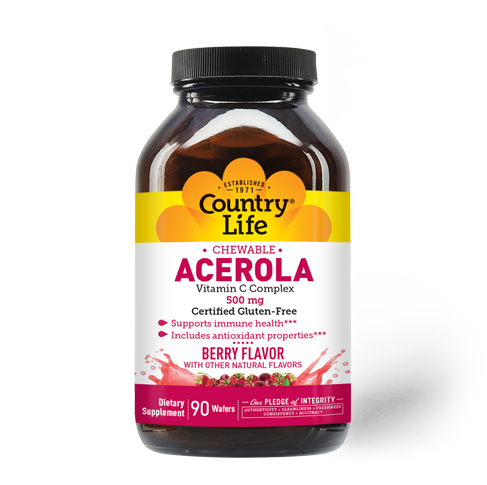
We also offer conventional vitamin C capsules and tablets, such as Chewable Acerola 500 mg and Chewable Vitamin C 500 mg. These are released into the body more quickly, and are generally well-tolerated for daily supplementation.
Which should you choose? Time release or conventional?
If you need high-dose vitamin C, have a sensitive stomach, and/or require vitamin C for iron absorption, the time-release version may be your best bet.
If you’re used to taking regular vitamin C and can tolerate normal doses without bowel disruption, then any of our vitamin C supplements should be fine.
Buffered vitamin C (vitamin C with natural calcium to buffer acidity) is another option for reducing acid- or gastrointestinal issues, such as reflux, from taking vitamin C.
Regarding iron, a time release capsule may be beneficial if you struggle to take enough iron and/or experience digestive discomfort from taking a higher dose iron supplement.
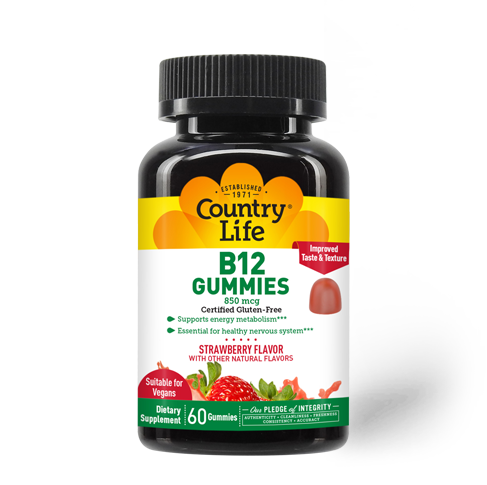
B-vitamins, like vitamin B12, may be beneficial in a time release capsule if there’s a deficiency or insufficiency, but taking the right form, which we’ll discuss next, may be more essential.
Talk to your healthcare practitioner for individual recommendations.
Shop Country Life Vitamins Buffered Vitamin C with Bioflavanoids 1000 mg and Country Life Buffer-C pH Controlled® 500 mg with calcium, magnesium, and aloe.
What Matters More: Time-Release or Nutrient Form?
As mentioned previously, time-release supplements, such as vitamin C, may offer greater benefits to specific individuals, including those who take large doses of vitamin C, people with iron or B vitamin deficiency, or those with a sensitive stomach.
However, nutrient form and synergistic nutrient combinations are also essential for optimal absorption.
For example, anyone with genetic variations that impact B-vitamin absorption, such as MTHFR, will benefit significantly from taking coenzymated (aka: methylated) B-vitamins versus a time-release capsule made from non-coenzymated B-vitamins.
Likewise, someone who is deficient or insufficient in iron may do better with an ultra bioavailable form of iron paired with synergistic nutrients that aid absorption, like vitamin C, versus a standard time-release iron supplement.
Ultimately, what matters more depends on the individual’s needs, genetics, state of health, and how they tolerate supplements.
Talk to your healthcare practitioner for specific recommendations.
Related reading: What Is a Coenzymated Vitamin? Exploring Coenzymated B12 Benefits
Shop Country Life’s Time-Release Vitamin C & Bioavailable B-Vitamins & Iron
Since 1971, Country Life Vitamins has been formulating and manufacturing the highest-quality vitamins, minerals, antioxidants, and other supplements to support healthy lifestyles.
Our line includes the time-release and conventional vitamin C, coenzymated B Vitamins, and bioavailable iron discussed, as well as a complete collection of:
- Multivitamins
- RealFood Prenatal
- Vitamin D (vegan and non-fish liver versions)
- Calcium
- Magnesium
- Digestive Enzymes
- Probiotics
- Amino Acids
- Fish Oil
- Hair Skin & Nails
- And sports nutrition supplements through our sister company Biochem
All our products are manufactured in NSF-GMP certified facilities that are also USDA organic-certified gluten-free!
We’re also committed to ethical sourcing of raw ingredients and complete extensive laboratory testing for purity and authenticity.
Check out our Pledge page and Our Mission and Values to learn more about why Country Life Vitamins has been a trusted brand for over 40 years.
References Mentioned in This Article
- “Sustained-release, extended-release, and other time-release formulations in neuropsychiatry”. J Clin Psychiatry.
- “A Randomized, Double-Blind, Crossover Study to Investigate the Pharmacokinetics of Extended-Release Melatonin Compared to Immediate-Release Melatonin in Healthy Adults”. Journal of Dietary Supplement.
- “A developed composite hard-gelatin capsules: Delayed-release enteric properties”. Heliyon.










Share:
What Are Nutritional Gaps + How Supplements Can Help