
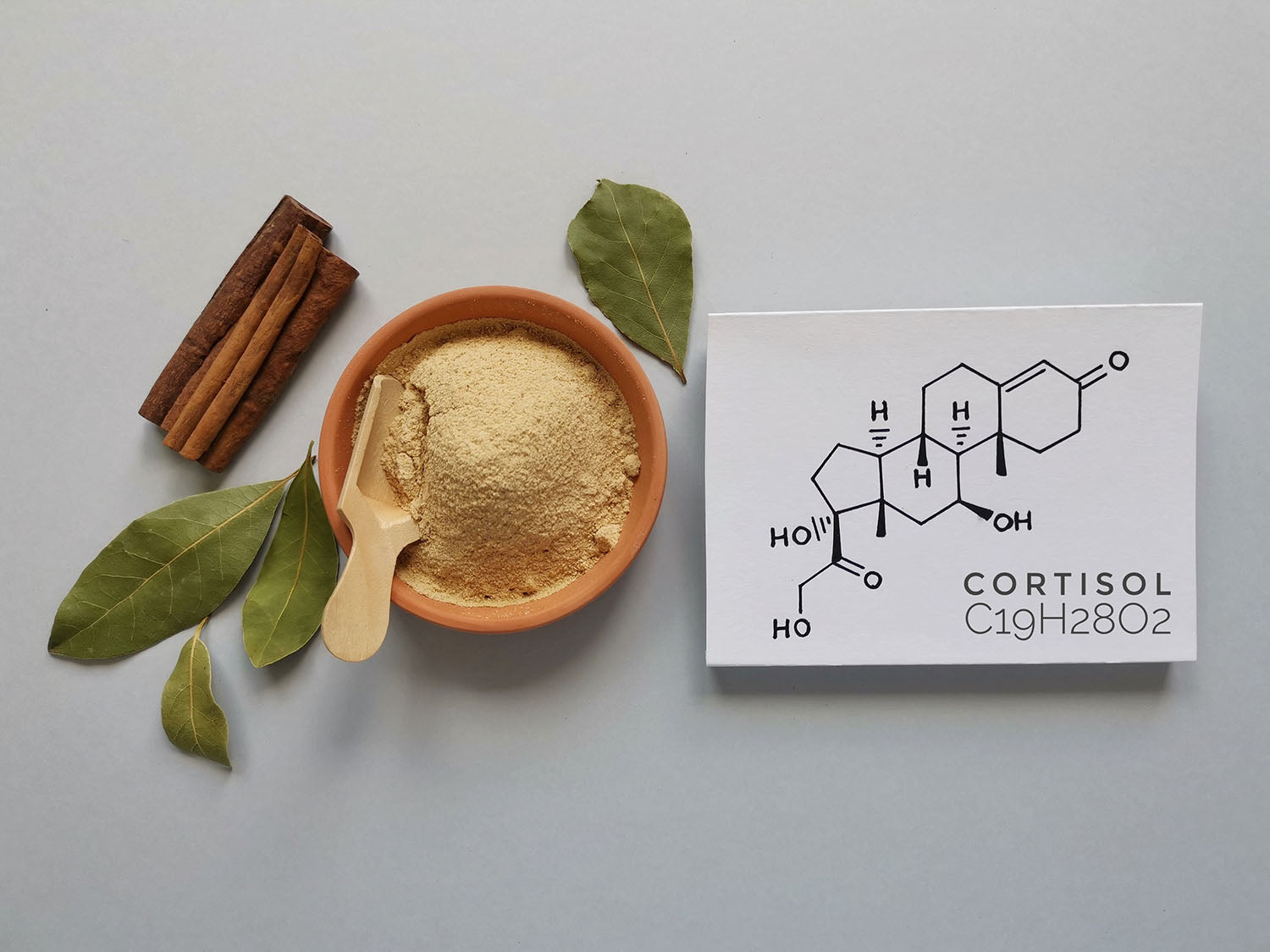
Cortisol is a key stress hormone involved in the body's natural fight-or-flight response.
It’s also released in response to injuries, infections, and chronic stress.
Although cortisol is essential to our survival and everyday functioning, excess cortisol, typically triggered by stress, can create an inflammatory state, leading to various unwanted symptoms such as trouble sleeping, fatigue, and brain fog.[1]
Fortunately, there are many ways you can manage cortisol and create a healthier, happier, and more relaxed body and mind.
What Causes High Cortisol?
Cortisol is a stress hormone produced by the adrenal glands and plays a role in metabolic function, inflammatory and immune response, endocrine (hormonal) function, and nervous system function.[1][2]
Cortisol secretion follows a natural 24‐hr cycle, with levels peaking about 30 min after waking and declining throughout the day, reaching their lowest levels during the early hours of sleep.
Unfortunately, persistent stress can disrupt the adrenals and the HPA (hypothalamic-pituitary-adrenal) axis, leading to excess cortisol output and a disruption of its natural 24-hour cycle.
Causes of high cortisol relate to physical, mental, and emotional stressors and may include:[1][2]
- Injury
- Illness (acute or chronic, physical, mental, or emotional)
- Trauma
- Pain
- Stress
- Fright
- Gut health issues
- Cushing's syndrome
- Addison syndrome
The takeaway: Brief bursts of high cortisol are beneficial for survival, but prolonged cortisol release can contribute to increased stress on the body and brain.
Symptoms of High Cortisol
Symptoms of high cortisol can be tricky to spot because they overlap with other symptoms and conditions, and because many people, especially the chronically stressed out, consider them normal.
Since cortisol affects so many systems (immune, endocrine, nervous, and metabolic) and organs, elevations can cause a range of symptoms.
Symptoms of high cortisol may include:[1][2]
- Aches and pains
- An inability to relax
- Brain fog or trouble concentrating
- Sleep disturbances, such as trouble falling asleep, staying asleep, or waking up exhausted
- Digestive issues
- Blood sugar issues
- Gut health issues
- High blood pressure
- Low sex drive
- Hormonal issues
In rare cases, chronically high cortisol can lead to a serious condition called Cushing's Syndrome.
However, for most people, common symptoms include trouble sleeping, feeling wired and tired, feeling stressed out and unable to relax, digestive health issues, and changes in mood or hormonal function.
11 Tips for Natural Cortisol Management and Support
For most people, the best way to support normal cortisol is to slow down and focus on the basics of sound physical, mental, and emotional health.
This means reducing stress, slowing down, sleeping enough, eating well, and tending to your emotional well-being.
Here, we offer 11 specific tips to help support cortisol management and stress naturally, based on research.
1. Prioritize Sleep
Sleep is the ultimate adaptogen/stress-buster and your absolute best friend for supporting normal cortisol levels.
Multiple studies have shown that a lack of sleep, especially prolonged lack of sleep, can cause an increase in cortisol, whereas optimal sleep helps keep cortisol levels in check.[4][5]
This is why many adrenal and cortisol health experts recommend getting at least 8-9 hours of sleep, or more if you’re trying to support healthy cortisol levels or recovery from burnout.
Unfortunately, if your cortisol is already elevated, you may have trouble winding down at night.
However, as you start taking steps to support your normal cortisol cycle, such as those mentioned in this article, it should become easier to relax and fall asleep.
Additionally, things like creating a consistent bedtime routine, sleeping in a cold room, getting morning light, turning off screens one or two hours before bed, and limiting caffeine can all help reset your sleep cycle.
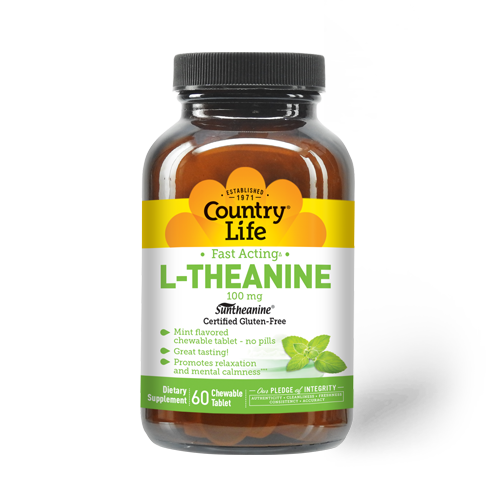
Supplements like Magnesium, L-theanine, and Ashwagandha may also support normal sleep and relaxation.[6][7]
Related reading: Deep Sleep 101: How to Increase REM Sleep
2. Reduce Caffeine
High cortisol often causes low energy, which can create a greater dependence on caffeine.
The problem is that research has shown that caffeine, particularly from coffee, can cause or contribute to high cortisol levels, creating another vicious cycle.[8]
Does this mean you have to give up caffeine completely? Not necessarily.
Although some people may benefit from abstaining from caffeine, most experts recommend cutting back to one cup a day taken in the morning and discontinuing use after noon.
This will better support cortisol and healthy sleep, helping break the wired-and-tired cycle.
Another option is to switch caffeine sources.
For example, research suggests that teas like green tea and Yerba mate may cause a smaller cortisol spike due to the combination of caffeine and other calming plant compounds, such as l-theanine in green tea and theobromine in Yerba Mate.[6]
If you don’t want to give up caffeine, consider experimenting with alternatives, try a half-caf, or wean yourself down to one cup of coffee per day.
Related reading: 25+ Natural Energy Boosters: Caffeine & Coffee Alternatives
3. Destress Daily
Stress is the ultimate cortisol antagonist, and must be managed with intention and care.
Everyone experiences stress, and some stress is healthy.
However, when stress leaves us constantly on edge, pessimistic, and hypervigilant, it’s time to take a step back and reclaim control of our stress response.
The easiest way to begin reducing stress is to adopt one or two self-care practices daily.
This helps raise awareness of our state of mind, creates time and space for calm reflection, and, over time, can help support normal cortisol levels.
Some simple ways to destress include:
- Exercising
- Laughing
- Drinking tea
- Deep breathing
- Taking a walk in nature
- Journaling
- Practicing mindfulness meditation or prayer, on your own, in a class, or with an app
- Spending time with a pet
- Getting morning sunshine
- Taking silent walks
- Practicing yoga
- Crafting or doing artwork
- Spending time with friends and family
- Gardening
- Soaking your feet
- Having a massage or facial
- Taking a sauna
Little stress management habits add up to significant results, so long as you’re consistent.
Try practicing one or two per day and see how your life and relationship to stress transform.
4. Take B-Vitamins
If you struggle with stress, research suggests B vitamins can offer excellent nutritional support.[9-11]
As discussed in The Role of B-Vitamins in Stress Management, B-vitamins (B1, B2, B3, B5, B6, B7, B9, & B12) affect various organs and systems associated with cortisol and the body’s stress response, including the:
- Adrenals
- Brain
- Endocrine system
- Gut
- Nervous system
Therefore, if we’re not getting enough B vitamins from our diet, it can negatively affect various aspects of our stress response, including cortisol regulation.
Stress can also deplete B vitamins, exacerbating nutrient levels and causing more stress.
B-vitamins can be found in various foods, including whole grains, leafy greens, eggs, poultry, meats, beans, and legumes.
You can also take a B-Complex supplement, such as Country Life’s Coenzyme B-Complex Caps, to ensure you’re getting enough.
Since B-vitamins are water-soluble, the body will excrete what it doesn’t use, and they are therefore safe to take as a supplement.
5. Exercise
Exercise is an excellent way to relieve stress and support normal cortisol levels, while also promoting cardiovascular, hormonal, and metabolic function.[14]
It can also help promote sleep, which is a bonus for cortisol support.
Though opinions on the best type of exercise for cortisol support vary (some practitioners recommend gentle exercise, while others promote more vigorous activity), there is no one-size-fits-all solution.
Therefore, the best way to exercise is to gauge how you feel.
If you feel invigorated and energized after your workout, that’s a positive sign. However, if you feel exhausted, overly sore, and burnt out, you’ve probably pushed it too hard.
When in doubt, start slowly and increase intensity as you get stronger.
Walking with a weighted vest, for example, is an excellent form of cardio plus weight-bearing exercise that can be done outdoors and with a friend for maximum stress-relieving benefits.
Yoga is also a favorite for supporting cortisol levels and can serve as a form of meditation, providing a double benefit.
6. Don’t Ignore Health Issues or Injuries
Cortisol isn’t just released in response to stress. It’s also an essential component of the body’s inflammatory response, which is activated by injuries, pain, or other health issues, such as infections.[1][2]
Therefore, if you’ve noticed any changes in your health, such as unusual symptoms (digestive, hormonal, skin changes, mood, etc.), new aches and pains, or just more fatigue, be sure to get checked out by a qualified healthcare practitioner.
Symptoms, no matter how small and inconvenient, are the body’s signals that something is off, and if ignored, can lead to changes in cortisol.
7. Try Ashwagandha
Ashwagandha, also known as Indian Ginseng, is an ancient Ayurvedic herb known for its benefits for stress, sleep, hormones, energy, and more.
In Ayurveda, it’s considered an adaptogen (relaxation-promoter) and rasanayana (a rejuvenator), and studies suggest it may help support normal cortisol, promote relaxation, and help you sleep.[15]
You can find Ashwagandha in various supplements, drinks (like Golden Milk), teas, gummies, and sports nutrition supplements.
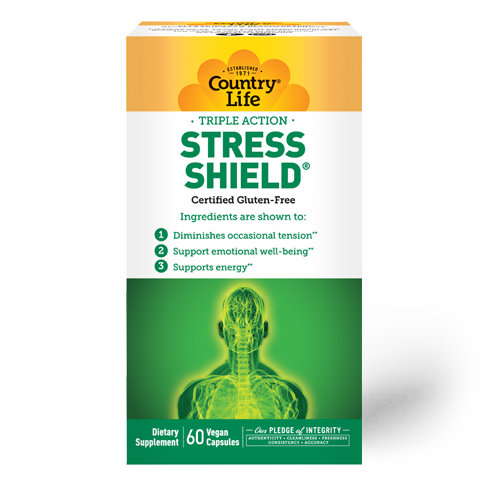
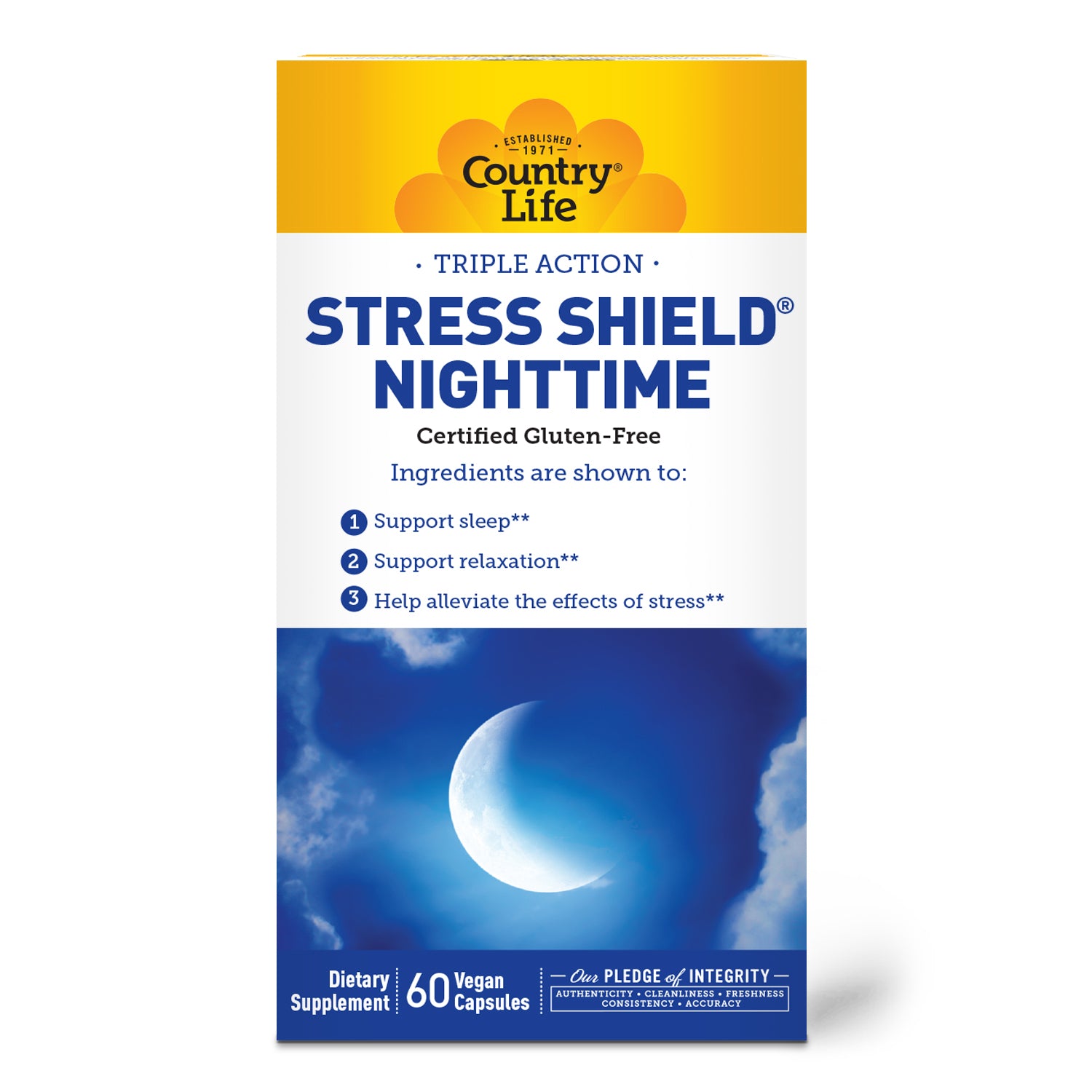
Country Life Vitamins offers a clinically studied form of Ashwagandha, Sensoril® Ashwagandha in Stress Shield® and Gut Connection® Stress Balance™.
8. Tend your Gut Microbiome
The gut-stress connection is well-documented in research on the gut-brain axis. This communication highway connects the brain and gut and houses the enteric nervous system (also known as the second brain).[16-18]
Interestingly, studies show that stress directly impacts intestinal barrier function and microbiome, while the microbiome also influences our stress response.
This is why certain gut health supplements, like probiotics and prebiotics, have become popular for supporting emotional well-being, along with a gut-friendly, anti-inflammatory diet.
Country Life’s Gut Connection® Stress Balance™ was formulated with this in mind, supplying the clinically studied prebiotic EpiCor® dried yeast fermentate, along with l-tyrosine, l-theanine, and Sensoril® Ashwagandha extract to feed friendly gut bacteria, helping ease stress, promote relaxation, and maintain digestive health.
9. Prioritize Healthy Relationships
Research has shown cortisol levels can be directly influenced by our closest relationships.
For example, one study showed that intimacy helps reduce cortisol in female partners, while another found the quality of intimate relationships and attachment either reduced or increased cortisol, depending on the couple’s mutual happiness.[19][20]
In other words, toxic relationships can cause imbalances in cortisol, likely due to increased stress on both partners.
This suggests our closest relationships play a significant role in cortisol management, and should be chosen with great care.
If you’re in a toxic or unhappy relationship, consider seeking help or cutting ties for the sake of your health.
10. Eat Low-Sugar, but not Low-Carb
What is the best diet for cortisol?
It depends on who you ask, but research suggests it should be low in refined sugar and processed, high-glycemic foods, but not devoid of carbs![21][22]
According to a study published in the journal Nutrients, eating healthy carbohydrates can suppress cortisol production, potentially leading to lower cortisol levels.[22]
This could be partly why people feel good and relaxed when they eat carbs.
The key is to choose healthy carbs from whole foods, such as whole grains, fruits, and vegetables, and to keep refined sugars low.
11. Try Fish Oil
Fish oil is commonly recommended for supporting cardiovascular function, cognitive health, and normal inflammatory response.
What’s lesser known is that emerging research suggests it may help support normal cortisol levels.
Although more studies are needed, this may be due to its beneficial effects on the inflammatory response, which can, in turn, affect cortisol levels.[23]
Shop Country Life’s Fish Oil Supplements, including Natural Omega-3, Omega-3 Mood, and Omega-3 Honey Gummies made from salmon, mackerel, anchovies, sardines, and herring.
Try Country Life Vitamins for Stress Support
If you’re interested in trying some of the supplements listed here for stress support, consider Country Life Vitamins.
Since 1971, Country Life Vitamins has been producing the highest quality vitamins, minerals, amino acids, herbal formulas, probiotics, prebiotics, digestive enzymes, and more, including:
- Fish Oil and Omega-3s
- L-theanine
- B vitamins, including co-enzymated (methylated) B vitamins
- Stress and Sleep support supplements (ashwagandha, magnesium, l-theanine, GABA)
- Gut and Digestive Health Supplements (prebiotics, probiotics, digestive enzymes)
What makes us different from all the rest?
In addition to using clinically studied ingredients, our supplements are manufactured in an NSF gluten-free certified and certified organic facility that’s third-party certified GMP compliant, ensuring our products are made to the highest quality standards.
Shop our full line of Country Life Vitamins supplements for stress support, sleep, energy, nutrition optimization, and more.
References Mentioned in This Article
- “Cortisol level dysregulation and its prevalence—Is it nature's alarm clock?” Physiological Reports.
- “Physiology, Cortisol.” [Updated 2023 Aug 28]. In: StatPearls [Internet]. Treasure Island (FL): StatPearls Publishing; 2025.
- “Association of magnesium intake with sleep duration and sleep quality: Findings from the CARDIA study”. Sleep.
- “Sleep and Circadian Regulation of Cortisol: A Short Review”. Curr Opin Endocr Metab Res.
- “Daily associations between salivary cortisol and electroencephalographic-assessed sleep: a 15-day intensive longitudinal study”, Sleep, Volume 47, Issue 9, September 2024.
- “Effect of Ashwagandha (Withania somnifera) extract on sleep: A systematic review and meta-analysis”. PLoS One.
- “The effects of L-theanine consumption on sleep outcomes: A systematic review and meta-analysis”. Sleep Medicine Reviews.
- “Caffeine Stimulation of Cortisol Secretion Across the Waking Hours in Relation to Caffeine Intake Levels”. Psychosomatic Medicine
- “A Systematic Review and Meta-Analysis of B Vitamin Supplementation on Depressive Symptoms, Anxiety, and Stress: Effects on Healthy and 'At-Risk' Individuals”. Nutrients.
- “Potential mental and physical benefits of supplementation with a high-dose, B-complex multivitamin/mineral supplement: What is the evidence?” Nutr Hosp.
- “Reducing occupational stress with a B-vitamin focused intervention: a randomized clinical trial: study protocol”. Nutr J.
- “Ashwagandha (Withania somnifera)—Current Research on the Health-Promoting Activities: A Narrative Review”. Pharmaceutics.
- “Steroids, stress, and the gut microbiome-brain axis”. Journal of Neuroendocrinology.
- “The effects of physical activity on cortisol and sleep: A systematic review and meta-analysis”. Psychoneuroendocrinology.
- “Effects of Ashwagandha Supplements on Cortisol, Stress, and Anxiety Levels in Adults: A Systematic Review and Meta-Analysis”. BJPsych Open.
- The Gut-Brain Axis: Influence of Microbiota on Mood and Mental Health”. Integrative Medicine: A Clinician's Journal,
- “Stressed to the Core: Inflammation and Intestinal Permeability Link Stress-Related Gut Microbiota Shifts to Mental Health Outcomes”. Biological Psychiatry.
- “Psychological Stress, Intestinal Barrier Dysfunctions, and Autoimmune Disorders: An Overview”. Frontiers in Immunology.
- “Does Attachment Get Under the Skin? Adult Romantic Attachment and Cortisol Responses to Stress”. Curr Dir Psychol Sci.
- “Intimacy as Related to Cortisol Reactivity and Recovery in Couples Undergoing Psychosocial Stress”. The American Psychosomatic Society. https://marriage.psych.ucla.edu/wp-content/uploads/sites/213/2020/05/Intimacy_as_Related_to_Cortisol_Reactivity_and.4.pdf
- “Short Study Exploring the Effect of the Glycaemic Index of the Diet on Energy intake and Salivary Steroid Hormones”. Nutrients.
- “Increasing Dietary Carbohydrate as Part of a Healthy Whole Food Diet Intervention Dampens Eight Week Changes in Salivary Cortisol and Cortisol Responsiveness”. Nutrients.
- “Effects of supplemental fish oil on resting metabolic rate, body composition, and salivary cortisol in healthy adults”. Journal of the International Society of Sports Nutrition.











Share:
What Vitamins Should I Take for Winter?
Celtic Salt vs. Himalayan vs. Table Salt: Which is the Healthiest?